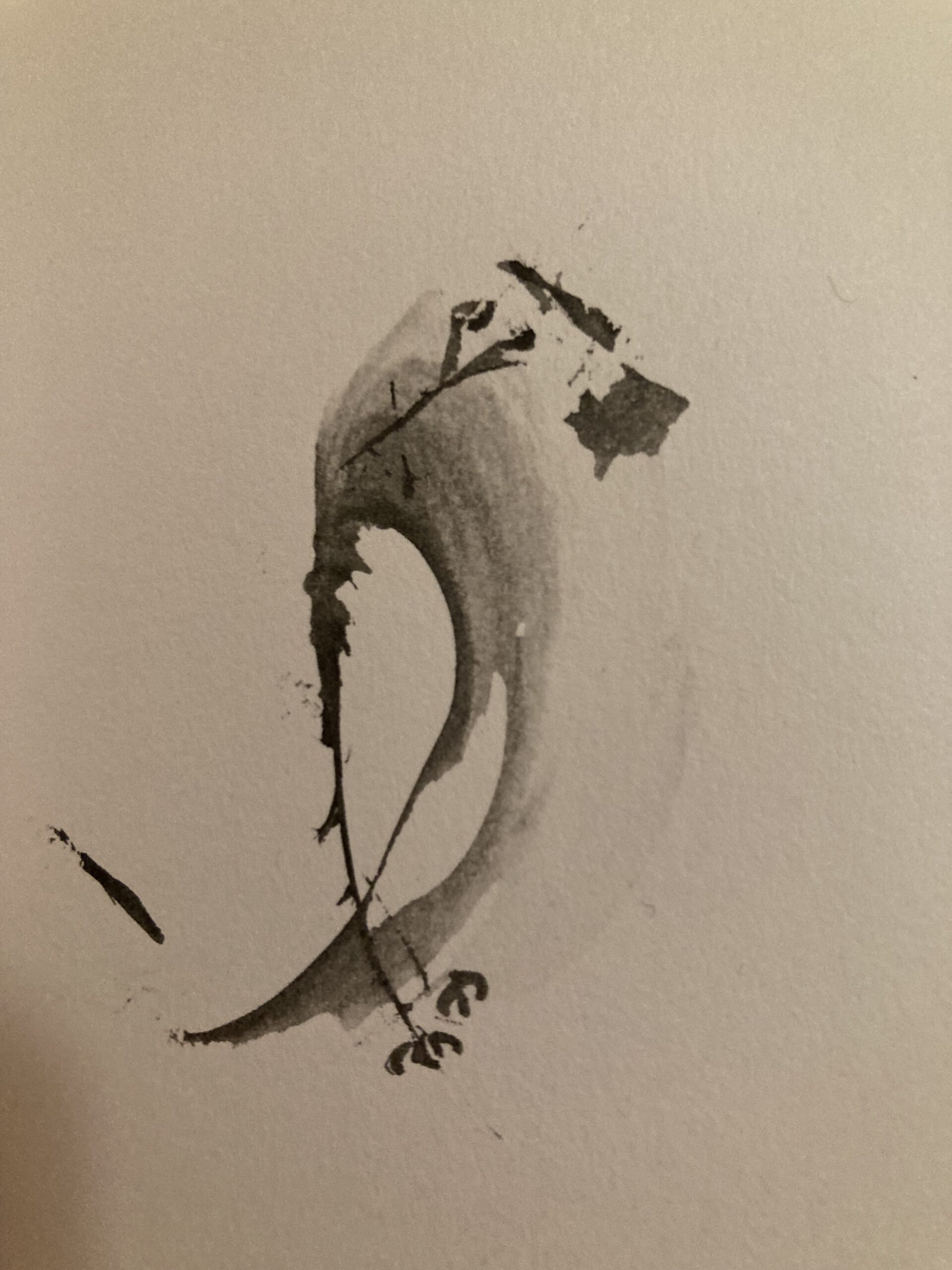
i was literally screaming my lungs out - “AKAZAAAAA” - along with the protagonist when akaza showed up before tanjiro in the Demon Slayer: Infinity Castle
but something about their battle lingered.
apart from the mind-blowing effort put into the animation, choreography, and script, there was one thing that stayed with me.
this fight wasn’t won by strength.
who are akaza & tanjiro… really?
Tanjiro Kamado is someone who loses his family to demons. his sister is turned into one. he’s given a brutal choice: run for the rest of his life and watch her die slowly, or become a demon slayer, kill demons, and try to save what remains of his family.
he chooses the harder path.
tanjiro carries an unusual mix of perseverance, strength, and compassion, not as traits, but as a way of being. he keeps moving forward not because he hates demons, but because he refuses to abandon what still matters.
Akaza, on the other hand, wanted a normal life. he tried to leave behind theft and violence. but the people he loved were killed, by humans. that loss hardened into resentment, and that resentment turned into power.
akaza becomes a demon not out of survival, but out of hatred.
they are polar opposites, not in strength, but in how they relate to intention.
the kind of fighter akaza is
akaza doesn’t just fight bodies.
he fights intent.
his entire combat philosophy is built around sensing fighting spirit, predicting attacks before they happen, and feeding on escalation. the stronger the will to win, the clearer the signal he reads.
effort gives him information. resistance gives him control.
this is why brute force never works against him.
hinokami kagura
when tanjiro realizes he can’t defeat akaza by being faster or more aggressive - after all, akaza is Upper Rank Three - he does something unexpected.
he stops.
he replays everything he has learned about akaza: how akaza reads intent, how he anticipates movement, how he thrives on fighting spirit itself.
and then tanjiro remembers his father, and the teachings of hinokami kagura.
hinokami kagura is described as a series of twelve forms, passed down through generations. performed not as isolated techniques, but as a continuous cycle. one movement flows into the next without waste or interruption.
but tanjiro doesn’t just adopt it as a breathing technique.
he understands the state behind it.
the art of war
sun tzu never described victory as overpowering the enemy. he described something far more unsettling:
winning by removing the conditions for defeat.
akaza is nearly unbeatable as long as his opponent is broadcasting intent. his strength depends on reading anticipation, emotion, and resistance.
hinokami kagura doesn’t give tanjiro stronger attacks. it gives him a different relationship to motion itself.
no excess movement. no anticipatory tension. no emotional leakage.
when tanjiro enters this state, he stops signaling his next move. akaza’s greatest advantage collapses - not because tanjiro hides his intent, but because there is nothing left to sense.
akaza himself notices it:
“he is a different animal now.”
this is what winning without battle looks like.
akaza is still fighting. tanjiro has already exited the game akaza trained for.
why this fight stays
akaza didn’t lose because tanjiro was stronger. he lost because the world he understood disappeared.
one warrior lived through intention. the other learned to let it go.
this fight lingers because it shows something uncomfortable: sometimes power doesn’t lose to greater power. it loses to silence.
when nothing is wasted, nothing can be countered.